
Ants are one of the most common reasons Sydney households call a pest technician. A few workers on a bench are irritating. A nest in a wall cavity, under a slab or in the garden that keeps sending foragers into the kitchen is a genuine hygiene and comfort problem.
Extreme Pest Control NSW treats indoor and outdoor ant issues for homes and businesses. The aim is to identify how they are getting in, where they are nesting, and which treatment will actually reach the colony.
What an ant problem looks like
Different ant species behave differently. Some nest outdoors and forage inside for sweets or protein. Others nest in wall voids, under paving, in pot plants or around hot water systems. Treating the trail with a supermarket spray often just splits the colony or makes them move one room over.
In Sydney, moisture, food waste, pet bowls, sticky residues and vegetation against the house all support ant activity. After rain, outdoor nests flood and workers show up indoors in large numbers. In summer, foraging increases around doors, windows and expansion joints.
Commercial kitchens, cafes and offices see ants as a food-safety issue. Trails across prep benches or storerooms need a method that is appropriate for food-handling areas, not a heavy broadcast spray.
Common signs
-
Trails
Repeating lines of ants between a food or water source and a nest entry — often along skirting, benchtops or the edge of a slab.
-
Nests
Small soil mounds in lawns or garden beds, ants pouring from cracks in concrete, or activity around outdoor taps and air-conditioner units.
-
Indoor nesting
Ants appearing from power points, window frames or wall cavities, sometimes with fine debris.
-
Seasonal surges
Sudden indoor activity after rain or during warm weather, even if the kitchen looks clean.
Why ant infestations persist
Killing visible workers does not remove the queen or the nest. Colonies rebound, and some species bud into multiple nests when they are disturbed by the wrong product.
Ants contaminate food, spread through shared walls in units, and make outdoor entertaining areas unpleasant. In food businesses they can contribute to failed hygiene inspections.
Moisture and food sources that are left in place mean the next colony can occupy the same path even after a successful treatment.
How ant treatment works
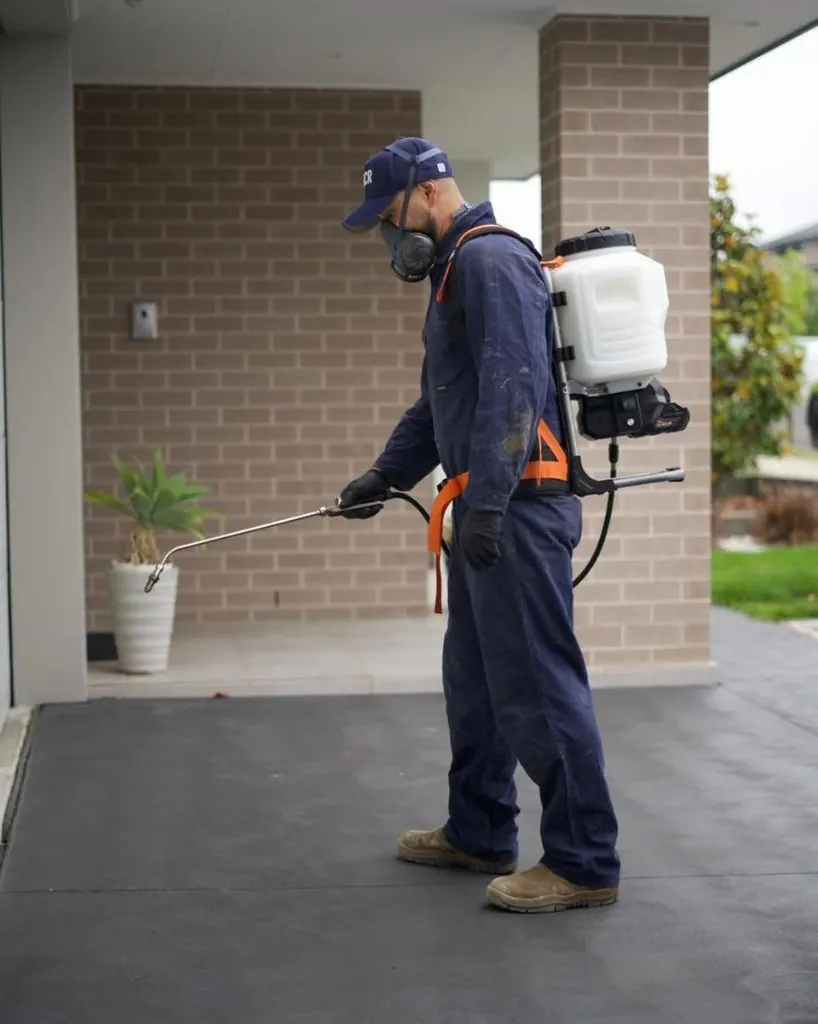
We start by looking at species behaviour, nest location and the building layout. Baiting is often the backbone of indoor ant work because workers carry the bait back to the nest. Residual treatments may be used on trails, entry points and external harbourage where it is appropriate.
Outdoor nests in lawns, paving and garden beds can be treated directly when they can be located. Vegetation, mulch against walls and weep holes are checked as entry points.
You may still see some ants while bait is being taken. That can be a sign the treatment is moving into the colony. We will tell you what to expect and what not to wipe up for a period after the visit.
Ant control with Extreme Pest Control NSW
We treat the nest and the conditions around it, not only the ants on the bench.
Family owned and based in Greater Sydney, we work in houses, units and small commercial sites where a practical, low-disruption visit matters.
If sanitation or moisture is feeding the problem, we will say so. Product alone does not fix a leaking tap or a bin that never gets cleaned.
Areas serviced
Ant Control is available across Greater Sydney. We travel to the property rather than operating a shopfront in every suburb.
See all service areas.
Related services
FAQs
Why do ants come back after I spray them? +
Contact sprays usually kill the workers you see and can cause the colony to relocate or split. Baiting and treating harbourage is more effective for most household species.
Are ant treatments safe around pets? +
We choose products and placements with pets in mind and will tell you where baits are, what to keep animals away from, and when areas can be used again. Always mention pets when you book.
How long does ant treatment take? +
A typical residential visit is completed in a single appointment. Colony collapse after baiting can take days rather than minutes, which is expected.